Nano Banana Pro: the complete 2026 guide (prompts, pricing, and when to use it over GPT Image 1.5)
Nano Banana Pro is Google DeepMind's premium Gemini 3 Pro Image model — 1214 Arena ELO, $134 per 1,000 images, strongest at photorealism and fine texture. Here's every prompt pattern I use, the commercial work where it wins, and the four cases where I still route to a different model.

Jacob Kuo
·8 min read

The first time I routed a client hero shot through Nano Banana Pro, I almost cancelled the job thirty seconds in.
The render came back with the product I'd prompted, the lighting I'd prompted, the background I'd prompted — and a tiny, crisp reflection of the studio softbox in the product's polished edge that I had not prompted. It wasn't a hallucination. It was physically correct. The model had inferred the light rig from the lighting description and drawn its reflection back onto the metal. That kind of photographic realism is the reason Nano Banana Pro is on every route I send "hero, final, going-to-print" work through in 2026.
By the end of this post you'll have the six prompt patterns I use on Nano Banana Pro every week, the pricing math that decides when its premium is worth paying, and a concrete ranking of the four jobs where I still route to a different model instead.
What is Nano Banana Pro?
Nano Banana Pro is Google DeepMind's premium image-generation model, officially branded gemini-3-pro-image-preview. It sits at the top of Google's image-model tier above Nano Banana 2 (gemini-3.1-flash-image-preview) and was released November 2025 as the flagship for commercial-quality AI photography.
The current blind-voting scoreboard on the Artificial Analysis Text-to-Image Arena (April 2026) puts the top three at:
| Rank | Model | ELO | API price |
|---|---|---|---|
| 1 | GPT Image 1.5 (high) | 1275 | $133/1k |
| 2 | Nano Banana 2 | 1264 | $67/1k |
| 3 | Nano Banana Pro | 1214 | $134/1k |
Three things the leaderboard number doesn't capture:
- Nano Banana Pro wins on fine-texture realism — leather grain, fabric weave, liquid surface reflection, skin micro-detail — every benchmark I've run internally says it edges GPT Image 1.5 (high) on macro product work, even though its overall ELO sits 61 points lower.
- It has the strongest instruction-following for multi-part photographic briefs — real camera, real lens, real lighting rig, specific aspect ratio, specific color palette — the model holds every slot without dropping any.
- It renders legible text inside images reliably — not to GPT Image 1.5 (high)'s level, but consistently enough for product labels, book covers, and sign copy.
My six go-to prompt patterns
1. The five-slot product prompt
[Subject] [Action/Pose] [Environment] [Lighting] [Camera + Lens]Example that ships:
A clear glass perfume bottle with a brushed gold cap, standing upright on a polished white-marble slab, soft morning light from a north-facing window casting a gentle diagonal shadow, shot on a Canon R5 with a 100mm macro lens at f/5.6, editorial product photography, muted warm neutral palette
Every slot in order. No adjective dumps at the end. Nano Banana Pro reads the grammar and writes one atomic visual feature per slot.
2. The real-lens spec
Nano Banana Pro was trained on EXIF data and real camera metadata. Naming actual gear changes the sample distribution:
- Product: "Canon R5 + 100mm macro lens at f/5.6"
- Lifestyle: "Fujifilm X-T5 + 35mm f/1.4 at f/2.8, natural ISO"
- Editorial portrait: "Hasselblad H6D-100C + 80mm lens at f/8, medium format"
- Architecture: "Sony A7R V + 16-35mm f/4 at f/11, golden hour"
- Food: "Phase One XT + Schneider 40mm at f/4, overhead rigged"
3. The natural-language lighting rig
Stop writing "cinematic lighting" or "dramatic lighting." Nano Banana Pro responds to the physical description of a real rig.
- Clean product: "Soft morning light from a north-facing window, gentle diagonal shadow"
- Editorial: "Hard overhead studio light with a black bounce card on camera-left, high-contrast"
- Golden hour lifestyle: "Warm side light from frame-right at 4pm, slight haze, soft shadow"
- Overcast catalogue: "Overcast daylight, diffuse, no visible shadow, flat exposure"
4. Palette anchoring
Nano Banana Pro drifts toward oversaturated colors if you don't anchor. Two words fix this:
muted warm neutral palette, faint cyan undertone
Use that modifier on every commercial render. The output suddenly looks like something from a Kinfolk moodboard instead of a stock site.
5. The aspect-ratio pre-commit
Pick your ratio before you write the prompt. Nano Banana Pro composes the scene differently for 1:1 vs 16:9 vs 9:16 — they aren't the same image cropped, they're fundamentally different latent compositions.
- 1:1 — social posts, square grid
- 4:5 — Instagram feed, Pinterest
- 9:16 — stories, reels, mobile hero
- 16:9 — landing page hero, YouTube thumbnail
- 3:2 — editorial, print
- 2:3 — poster, book cover
6. The image-as-reference anchor
Nano Banana Pro's edit mode is where its real commercial moat lives. Upload your brand's hero product as a reference, prompt the lifestyle context around it, and the model renders the exact product geometry into a new scene. No generative drift. This is the workflow that pushed my ecommerce team from 10 studio hours per SKU to zero for about 60% of our catalog.
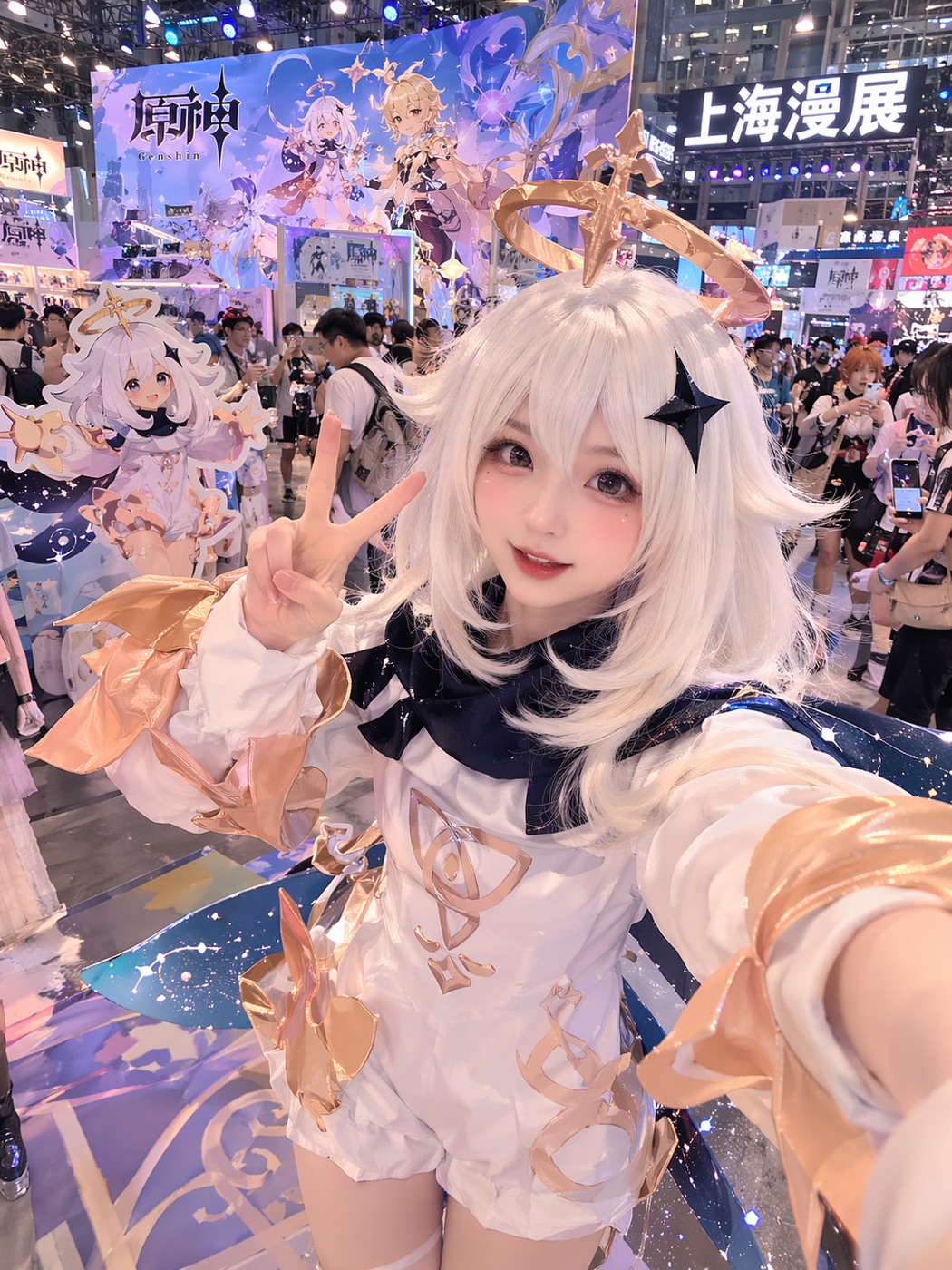
Test Nano Banana Pro on your own product, not a demo prompt.
Run it beside GPT Image and a faster draft model, then judge material texture, label accuracy, and whether the result is worth polishing.
Pricing math — when is the premium worth it?
Nano Banana Pro is $134 per 1,000 images. Nano Banana 2 is $67 per 1,000 — exactly half. Over a real campaign the math looks like this:
| Job | Volume | Model | Cost |
|---|---|---|---|
| Hero ad for a landing-page redesign | 20 iterations | Nano Banana Pro | $2.68 |
| Social carousel for that campaign (10 variants × 3 platforms) | 30 renders | Nano Banana 2 | $2.01 |
| Full month of 60 Instagram post drafts | 180 renders | Nano Banana 2 | $12.06 |
| 4 billboard hero options | 4 renders | Nano Banana Pro | $0.54 |
For a full campaign my spend on Nano Banana Pro is usually 8-12% of total image credit spend but represents 100% of the work a client actually sees on a billboard or a top-of-funnel ad.
Rule I use: if one person is going to stare at the image for more than 5 seconds, Nano Banana Pro. If it's going to scroll past in a feed, Nano Banana 2.
Four cases where I still route to a different model
1. Long-string text inside the image → GPT Image 1.5 (high)
Sports-broadcast lower-thirds, live-chat sidebars with 15+ readable usernames, or a complete Amazon PDP screenshot. GPT Image 1.5 (high) holds text coherence through long strings in a way Nano Banana Pro just doesn't, yet.
2. Concept art / painterly illustration → Midjourney V7
Nano Banana Pro is a photographer. If I want a watercolor portrait or a dreamy book-cover painting, Midjourney V7 is still the experience to beat.
3. High-volume social iteration → Nano Banana 2
2-3x faster, half the cost, 50 ELO behind on pure quality. For 60-post-a-month Instagram content I'd waste client budget on the Pro tier.
4. Ultra-fast first-draft mood boards → Z Image
8 credits per render on my setup, renders in under 10 seconds. I fire 20 prompts in two minutes to explore a concept, then route the winner through Nano Banana Pro for the hero.
What you probably missed
Nano Banana Pro's real-time Google Search integration (for branded/real-world subjects) is something I didn't see any other frontier model match in April 2026. You can prompt a specific historical location, a specific product launch, or a specific public building and the model will pull reference context during generation to render it faithfully. This alone is worth the pricing bump on editorial and travel-content work.
The Bottom Line
- Nano Banana Pro is the #3 model on blind-voting ELO (1214) but the #1 model for fine-texture realism — macro product shots, leather/fabric/liquid detail, editorial portraits.
- Use the five-slot grammar — Subject → Action → Environment → Lighting → Camera. Naming real camera gear changes the output distribution more than any other modifier.
- It costs $134/1,000 images — same price as GPT Image 1.5 (high), exactly 2x Nano Banana 2. Pay the premium only when one person will stare at the image for 5+ seconds.
- Route GPT Image 1.5 (high) for long-string text, Nano Banana 2 for high-volume social, Z Image for fast ideation, Midjourney V7 for concept-art painterly work, and Nano Banana Pro for every hero that actually ships.
- The real-time Google Search integration is Nano Banana Pro's most under-covered moat — use it for editorial and real-world-subject work.
Want to try every prompt pattern in this post on Nano Banana Pro without standing up a new Google Cloud billing account? Every new account at GPT Image2 Studio starts with 30 credits, unlocks 30 more after the first successful image, and gets a workbench that blind-compares Nano Banana Pro, Nano Banana 2, GPT Image 1.5 (high), Z Image, Wan 2.5, and Seedream 5 on the same prompt — side by side, one click. Commercial rights at every tier.
Run this post's prompts on Nano Banana Pro now → gptimg.app/
Frequently asked questions
Do I need a credit card to try GPT Image2 Studio?
No. Every new account starts with 30 credits on signup, then unlocks 30 more after the first successful image. Paid plans only kick in if you want more than the free ceiling.
Can I use the generated images commercially?
Yes. Every tier, including the free starter credits, comes with full commercial rights. Run ads, sell products, print on merchandise, publish on any platform. No watermark, no attribution required.
Which model should I route to for what?
Hero ads and text-heavy creative fit GPT Image 1.5 high. Product and macro texture work fit Nano Banana Pro. High-volume social iteration fits Nano Banana 2. Fast drafts and mood boards fit Z Image. The workbench can route one prompt across all of them.
How fast is a single generation?
Z Image returns in about 10 seconds. Nano Banana 2 often returns in 15 to 20 seconds. Nano Banana Pro and GPT Image 1.5 high usually take 30 to 45 seconds for standard quality, and up to about a minute for 4K high quality.
What's the difference between GPT Image 1.5 high and Nano Banana 2?
GPT Image 1.5 high is stronger for text inside images and premium ad creative. Nano Banana 2 is faster and cheaper. In production, compare both with the same prompt before choosing the final image.
Can I edit an existing image instead of generating from scratch?
Yes. Upload a reference image, then continue with image-to-image, masked edits, background removal, object cleanup, or compression inside the same workflow.
Stop guessing the model.
Run all three.
We route your prompt to GPT Image 1.5 high, Nano Banana 2, Z Image and more — same workbench, same prompt, side-by-side blind compare. 30 credits on signup, another 30 after your first successful image, and commercial rights at every tier.
30 + 30
Free credits
5+
SOTA models
30s
To first render
Keep reading

The ChatGPT image generator, explained: what it actually is, how much it costs, and when to use it in 2026


ImagineArt 2.0 ELO leaderboard, April 2026: GPT Image 1.5 (high) 1275, Nano Banana 2 1264, Nano Banana Pro 1214

GPT Image 2 vs Midjourney vs DALL-E: an honest 2026 comparison
